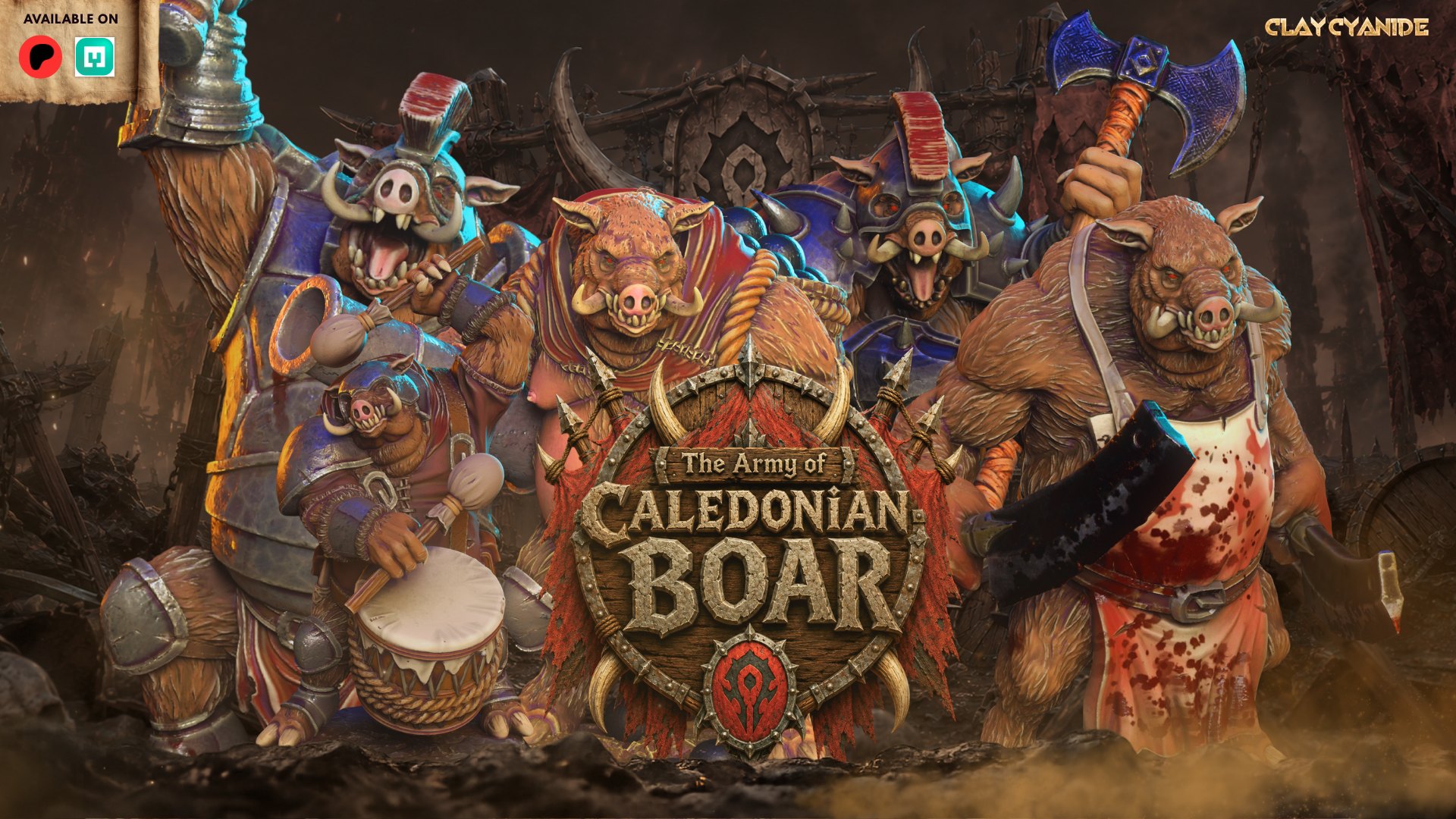
The Unpaid Tithe
There is a law older than any king's, and it is this: the forest is not given, it is borrowed. The Huntress who walks the high moor lends her game to those who tithe her, a first kill left uneaten, a horn of blood poured into the peat, a night of the hunt gone unhunted in her name.
The last king of the low country did not tithe. He took the boar of the wood as though it were his own herd. He hung their heads on his hall and salted their flesh for winter and never once left a kill for the moor. And the Huntress, who forgets nothing, sent him a single answer. They called it the First Tusk.
It came down out of the Caledonian dark the size of a war-cart, and it unmade his kingdom the way rot unmakes a corpse, slowly, and from the inside. When the king begged the heroes of every land to come and end it, they came in their hundreds and hunted the First Tusk across the moor for nine days. On the ninth, they killed it. And then, over its hide, they killed each other.
The Hunt ended not in triumph but in a heap of dead heroes cooling around a butchered god-beast. They thought the killing was the end. They did not understand the peat.
What the Peat Gave Back
Caledonian ground does not let go of what it takes. Bodies laid in the bog do not rot, they keep. The moor remembers every death fed to it. The First Tusk bled out across nine miles of that peat, nine days of a god-beast's blood soaking down into a ground that forgets nothing.
Peat remembers. And peat, given enough blood and enough time, answers. Where the great boar fell, the bog began to give up a host. Not the First Tusk reborn, something worse, because something many. Boar-shaped men. Man-shaped boars. Each one rising out of the black water tusked and bristling and carrying a single splinter of the First Tusk's death and every ounce of its wrath.
They call themselves nothing, because names are a low-country vanity. But the old word for a gathering of boar is a sounder, and that is what the moor birthed: the Sounder Risen, a war-host with one heartbeat and one grievance.
The Drum-Heart
Understand the thing that matters most, or understand nothing about this army: the risen do not stay risen on their own. A boar-kin dragged from the peat is a borrowed thing. Cut the wrath out of it and it remembers it is supposed to be dead, and it sinks.
What holds the Sounder in the waking world is not magic and not faith. It is rhythm. Somewhere in every warband stands a drummer, and on that drum beats the heartbeat of the First Tusk. So long as the drum sounds, the peat-born hear the god-beast's heart still going, still angry, still un-killed, and they do not sink. They march. They rage. They remember why.
This is why the low country's generals learn, too late, to aim for the drummer first, and why the drummer is guarded like a warlord. The Boar Musician is not a mascot. He is the reason the army exists past sundown.
The War-Roles of the Sounder
The peat does not rise the host at random. It gives each boar-kin back shaped by how it died in the old Hunt, and by what it has to avenge.
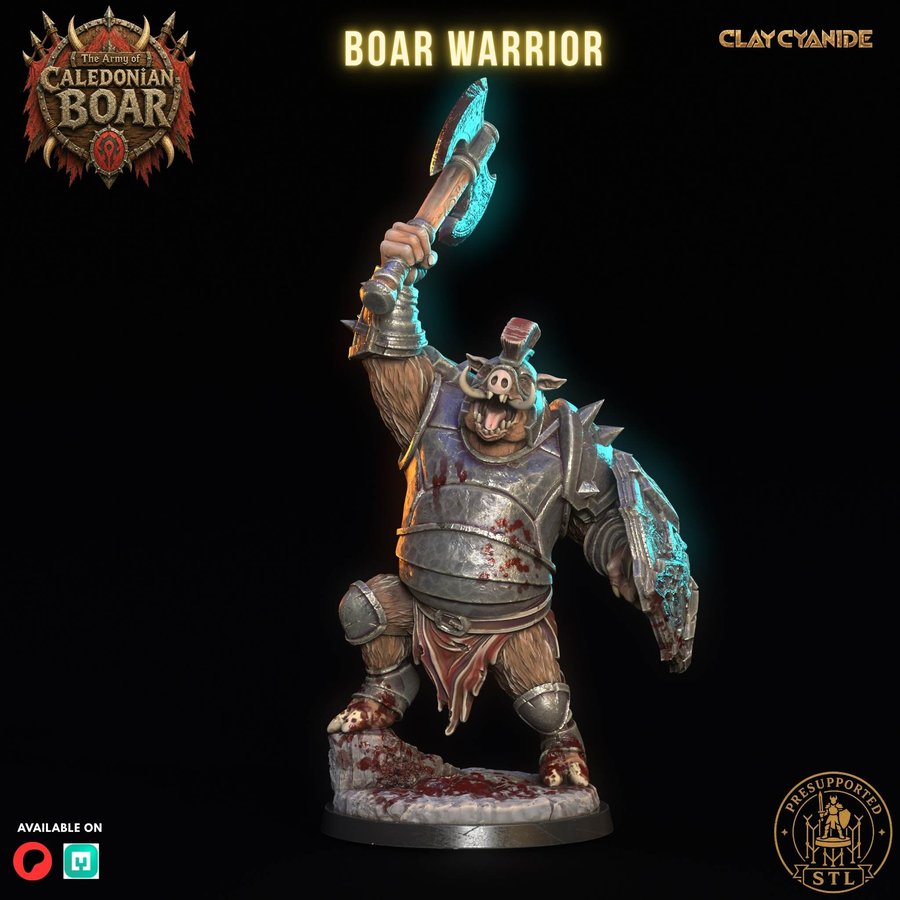
Axe and shield, iron over fur, risen in the greatest numbers. The rank of the old wood-boar, come back armed. Where the line holds, it holds on their backs.
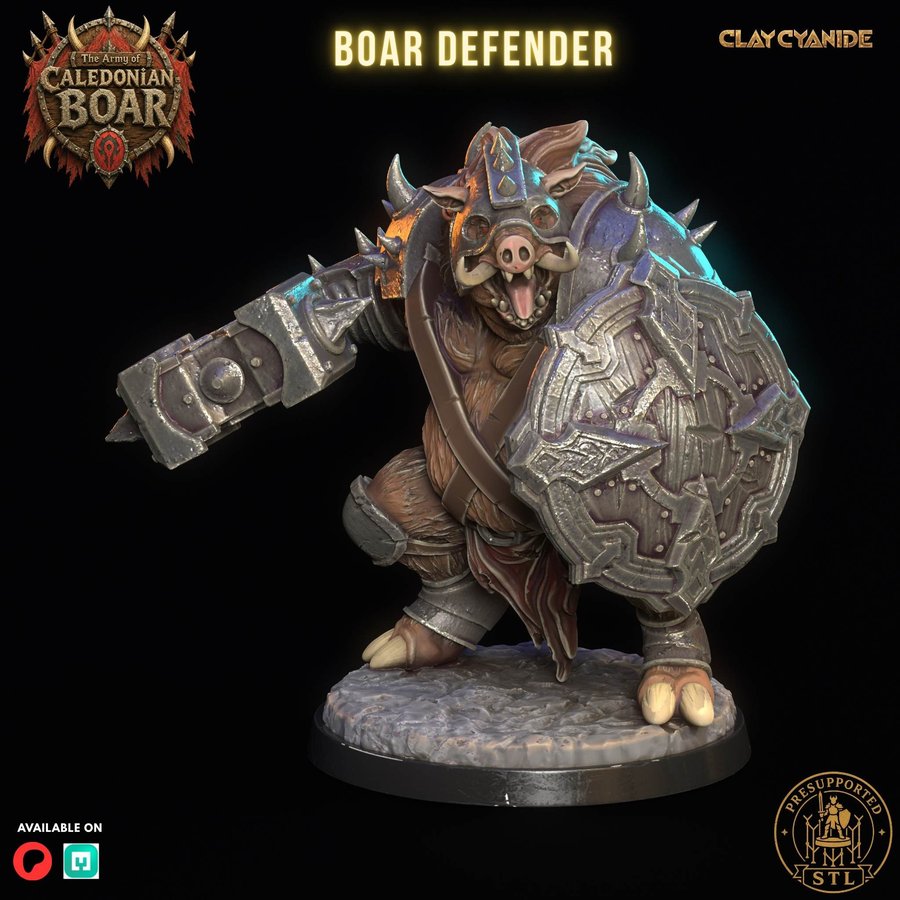
The shield-wall made flesh. Vast, armored, immovable. They lock their shields around the drummer and simply do not move.
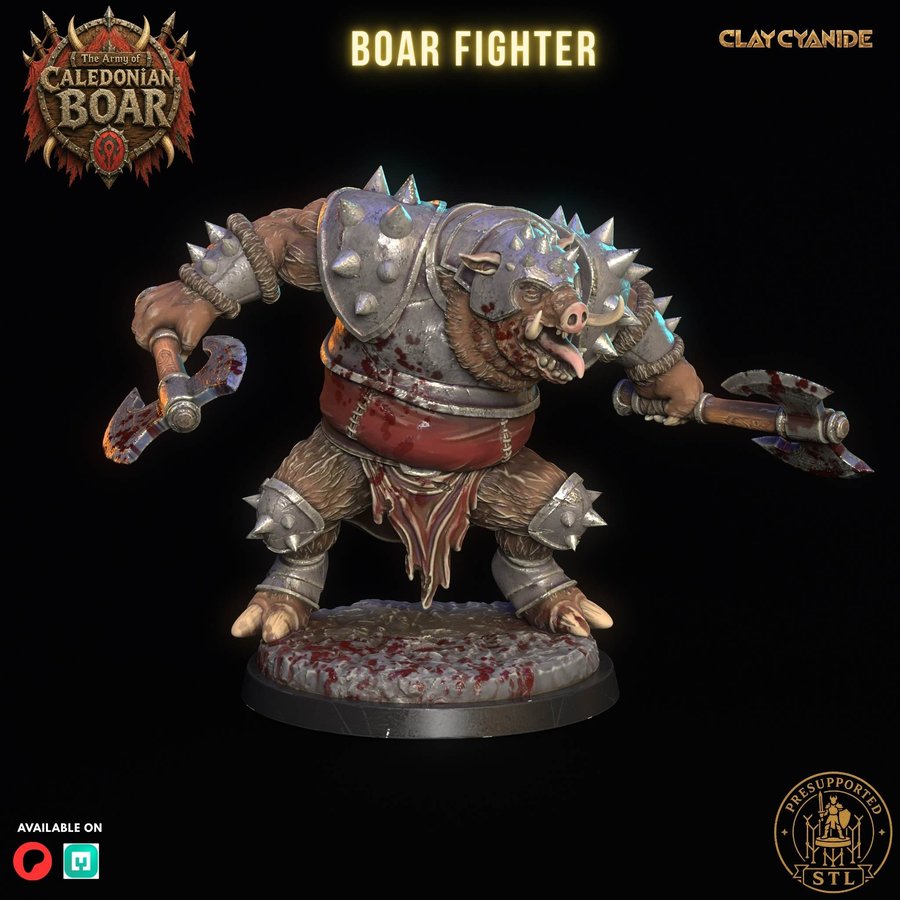
Dual-axed and low to the ground, risen from the boar run down by hounds and horsemen. They have not forgotten the running. Now they run others down.
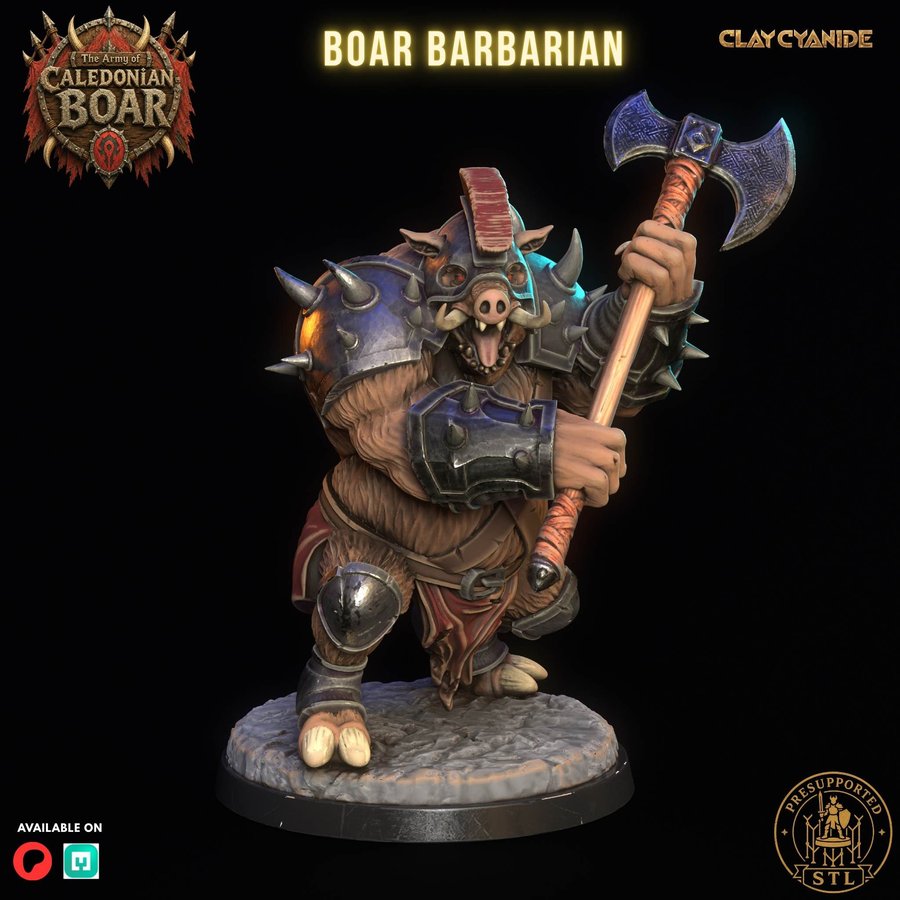
The rawest of the peat-born, dragged up freshest, closest to pure animal wrath. Great-axe, no discipline, no mercy.
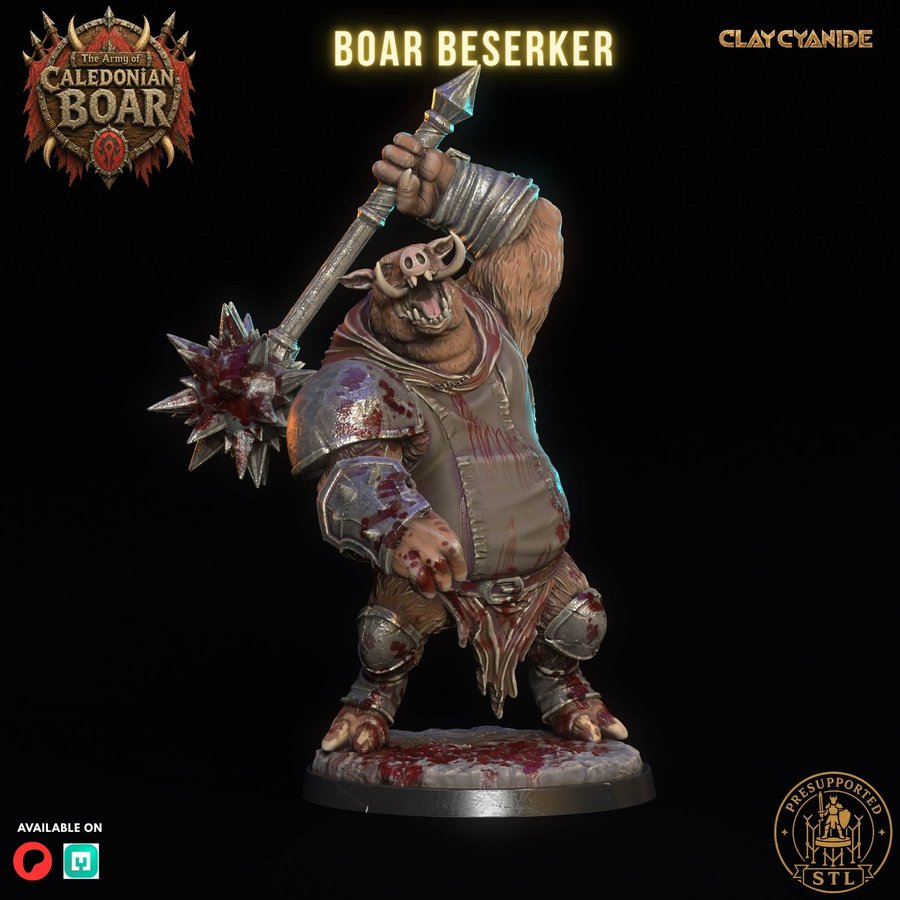
These rose remembering their own quartering most vividly of all. They fight soaked in it, painting the moor red with a rage that is really only grief with a weapon in its hand.
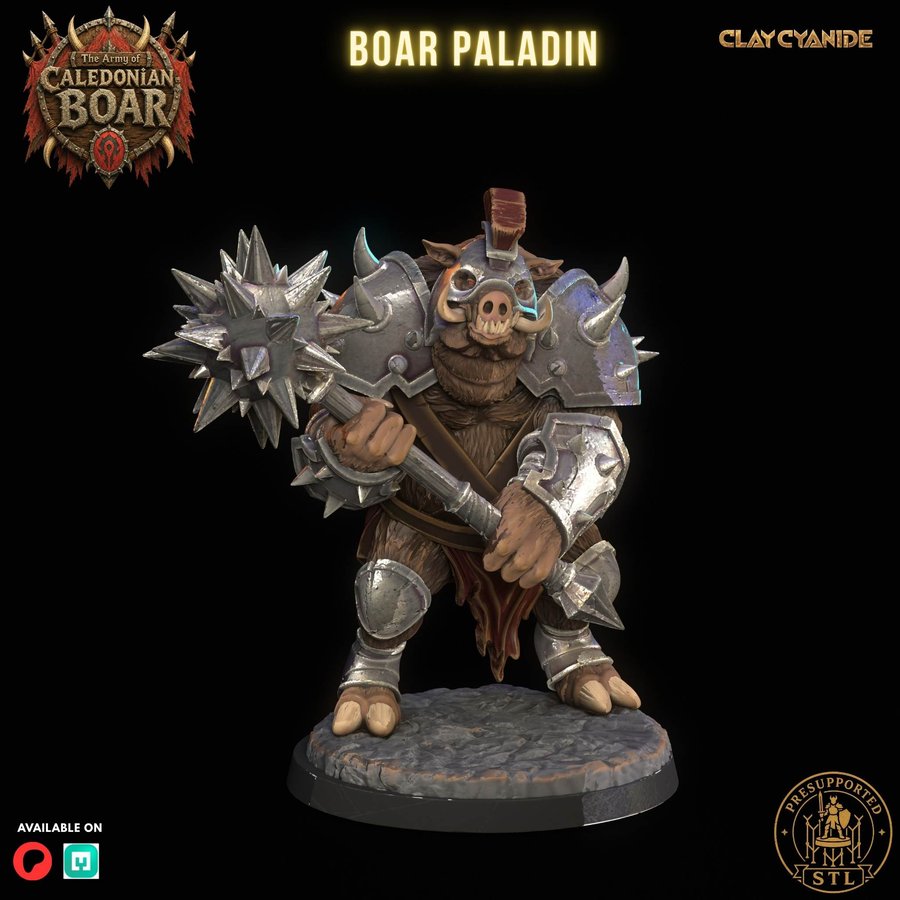
Some of the Sounder rose believing the First Tusk was the Huntress's own judgment given tusks. He carries that faith like a mace, and the terrible thing is that he may be right.
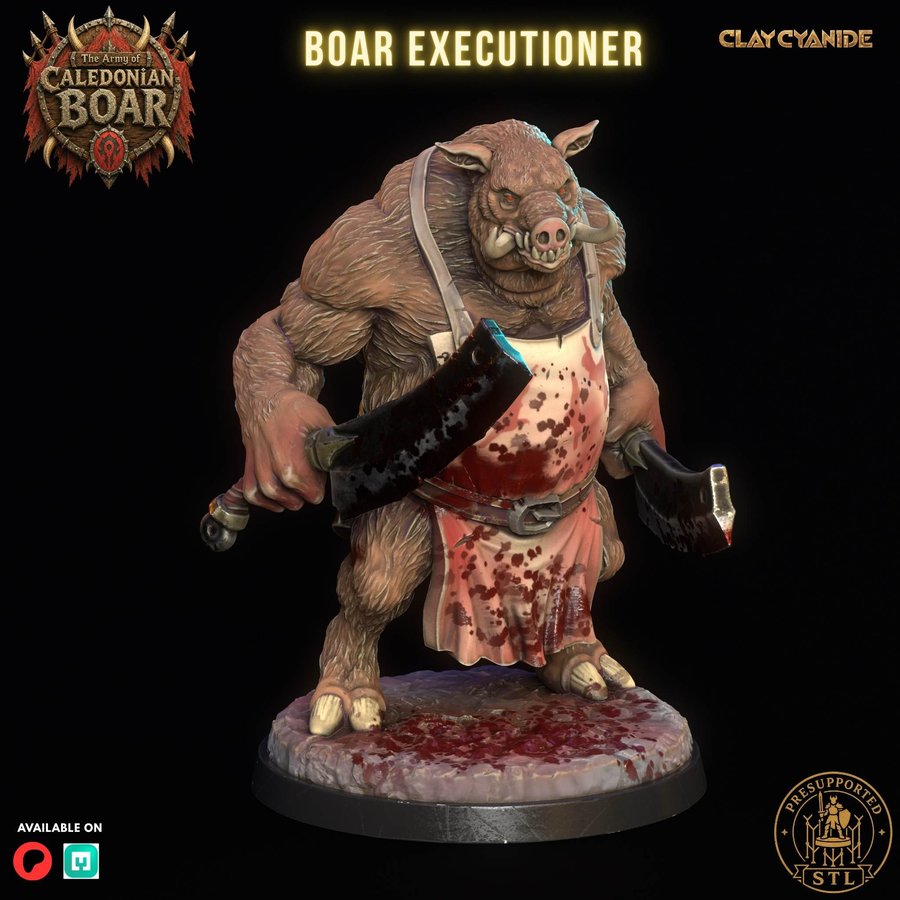
The heroes quartered the First Tusk and squabbled over the cuts. He returns the favor, patient and aproned, because the peat taught him that flesh keeps.
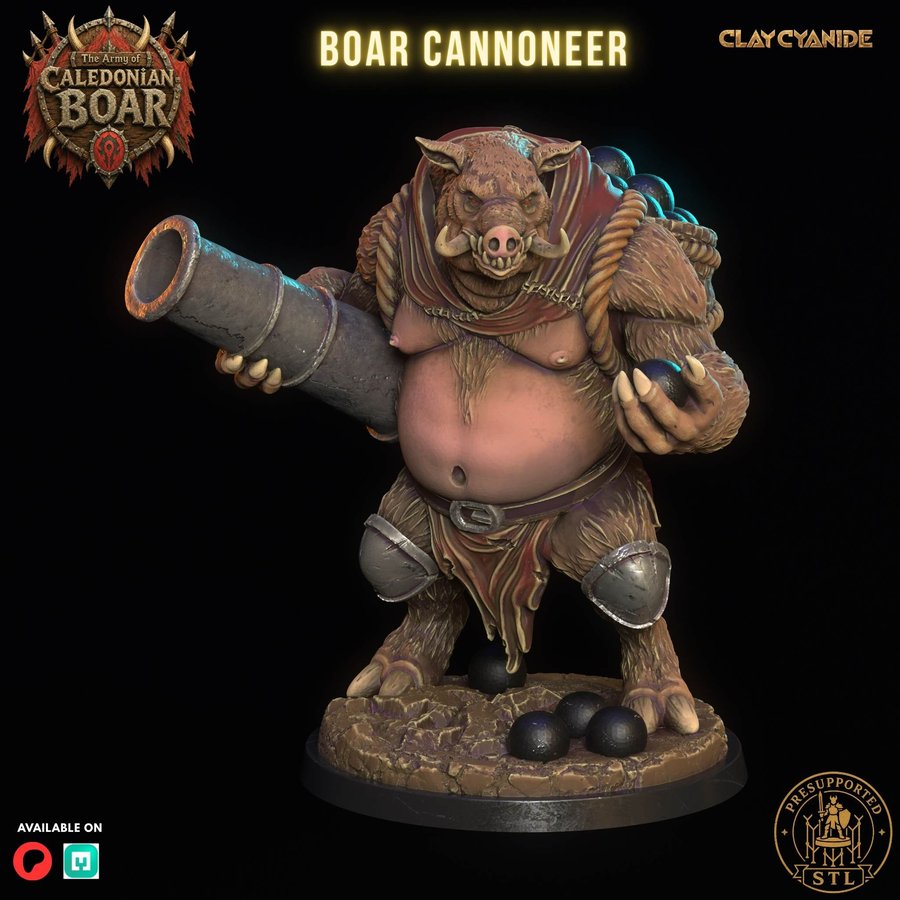
The last army came with blackpowder, certain gods die to gunpowder. The Sounder took their weapons off their corpses. Whatever you bring to kill the north, the north will keep, and use.
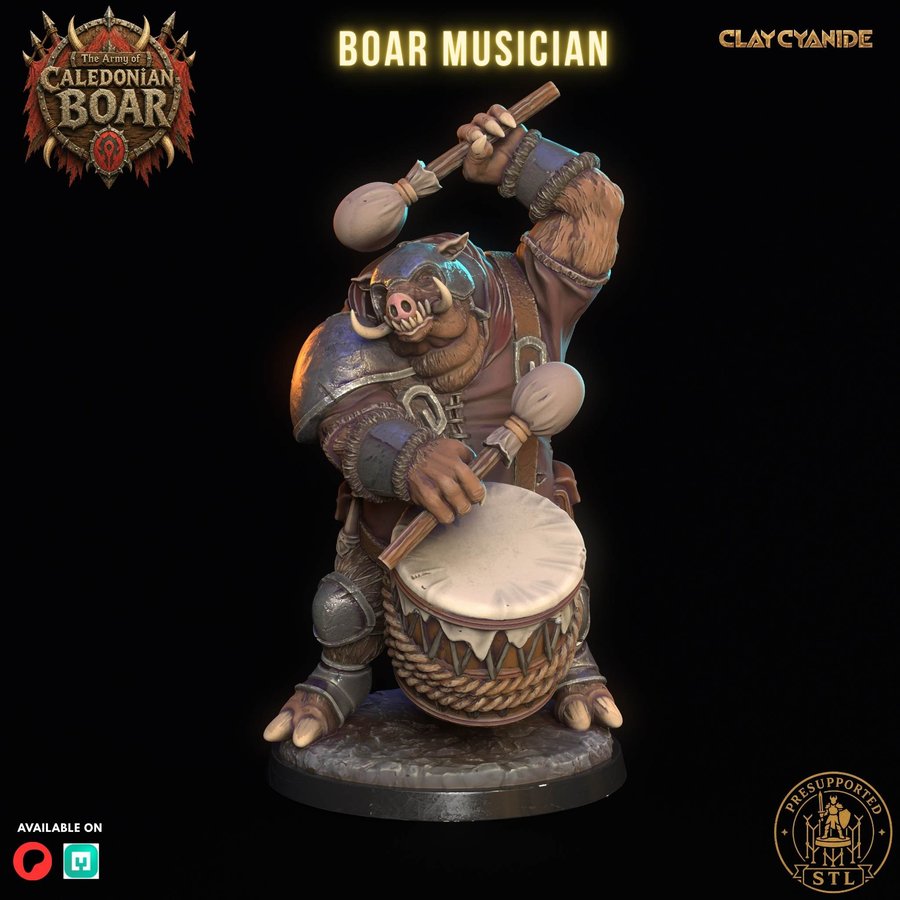
The heartbeat of the First Tusk made sound. Kill him last, if you are wise, and first, if you want to win.
The Things Buried Deeper
The First Tusk's blood woke the boar-kin. But it also stirred older sleepers, things the peat took long before, now risen vaster still. The Sounder calls them the Fen-Giants, bog-tanned, moss-hung, slow as the turning year and strong as the ground itself. They do not remember being boar. They may not remember being anything. But they hear the drum, and the drum says march.
The Three Risings
The moor does not give up its host all at once. Blood this old surfaces slowly, and the Sounder swells with the turning of the moon.
The First Rising
The vanguard. The warriors, the fury, the drum, the butcher, the thief of thunder. The host that walks first out of the black water and remembers first why it is angry.
The Second Rising
Deeper sleepers, stranger shapes, the Fen-Giants stirring, the warbands that were buried too long to be simple.
The Third Rising
What waits at the very bottom of the peat, under nine days of a god's blood, in the dark the low country prays never surfaces.
Three risings. Three months. The wall that was built to keep the north out discovers, too late, that it was only ever keeping the north waiting. The Hunt is over. The hunting has begun.