What Is the Ars Goetia? A Collector's Guide to the 72 Demon Kings
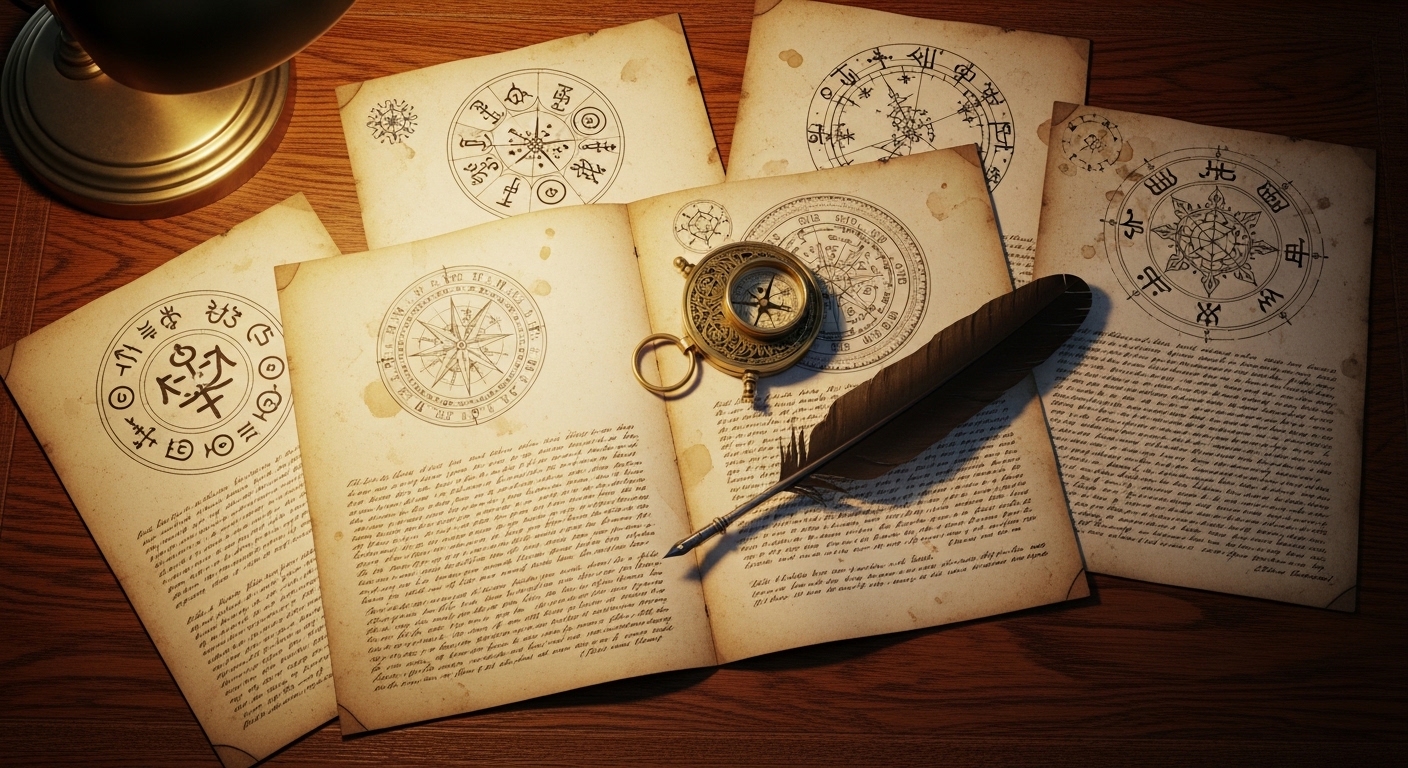
The Ars Goetia is the first section of the Lesser Key of Solomon, a 17th-century grimoire that catalogues 72 demons allegedly bound by King Solomon himself. Each spirit is assigned a rank, a legionary count, and a sigil -- an arcane seal that a summoner must inscribe to call the entity forth. For centuries, the Ars Goetia has shaped how Western culture imagines demonology: not as mindless evil, but as a rigid, feudal hierarchy of dukes, marquises, presidents, earls, and kings. It is this dark aristocracy that Clay Cyanide's Ars Goetia miniatures collection brings to the tabletop.
Origins: The Lesser Key of Solomon
The Lemegeton Clavicula Salomonis -- the Lesser Key of Solomon -- is a compilation of five books of demonological and angelic magic. Its earliest known manuscripts date to the mid-1600s, though much of the material draws from older medieval and Renaissance sources, including Johann Weyer's Pseudomonarchia Daemonum (1577). The Ars Goetia is by far the most famous section, providing detailed descriptions of each demon's appearance, abilities, and the number of infernal legions they command.
Unlike popular depictions of demons as shapeless horrors, the Goetia describes beings of terrifying specificity. Paimon rides a dromedary camel, crowned and preceded by a host of musicians. Beleth arrives on a pale horse amid a symphony of trumpets. Asmodeus bears three heads -- bull, man, and ram -- and rides a dragon with serpent's tail. These rich visual descriptions make the Ars Goetia an inexhaustible source of inspiration for artists, sculptors, and miniature designers.
The Nine Kings of the Goetia
Among the 72 spirits, nine hold the supreme rank of King. They are the pillars of the infernal hierarchy, each commanding vast legions and possessing dominion over specific domains of forbidden knowledge. Here they are, in their canonical order:
- Bael (#1) -- The First King. He speaks with a hoarse voice and grants the power of invisibility. Bael is the final seal in Clay Cyanide's Ars Goetia collection -- the last King yet to be sculpted. His throne awaits.
- Paimon (#9) -- The Obedient King. Master of arts and sciences, Paimon rides westward on a great dromedary, preceded by a host playing cymbals and flutes. His Clay Cyanide miniature captures this regal procession in stunning detail.
- Beleth (#13) -- The Terrible King. He rides a pale horse and all manner of music plays before him. Summoners must draw a hazel wand to the southeast and command him into a triangle, lest they be consumed by his fury.
- Purson (#20) -- The Lion King. A great king with a lion's face who carries a viper and rides a bear. Purson knows all things hidden -- past, present, and future -- and provides good familiars.
- Asmodeus (#32) -- The King of Wrath. Also known as Asmoday, he bears three heads (bull, man, ram), rides a dragon, and breathes fire. Perhaps the most infamous demon in all of Western demonology, featured heavily in the Book of Tobit.
- Vine (#45) -- The Lion-Mounted King. He appears as a lion riding a black horse and carrying a viper. Vine builds towers, demolishes walls, and makes waters rough by storms.
- Balam (#51) -- The Three-Headed King. With the heads of a bull, man, and ram (like Asmodeus, but distinct), Balam rides a bear with a goshawk upon his fist. He speaks with a hoarse voice and gives perfect answers on past, present, and future.
- Zagan (#61) -- The King-President. A bull-winged griffin who can turn water into wine and blood into oil. Zagan makes fools wise and is a master of transmutation and alchemy.
- Belial (#68) -- The Worthless King. One of the most powerful entities in the Goetia, Belial was created second only after Lucifer. He appears as two beautiful angels in a chariot of fire and distributes senatorships and titles.
Clay Cyanide has sculpted eight of the nine Kings as part of the Ars Goetia Volume I collection. Each miniature is a presupported STL file engineered for resin 3D printing at 75mm scale, with every anatomical detail, sigil, and infernal regalia faithfully recreated from the original grimoire text. Bael -- the First King -- remains the final frontier, a crown jewel yet to be forged.
Beyond the Kings: Dukes, Marquises, and the Full Hierarchy
The 72 spirits are not all kings. The Goetia's feudal structure includes dukes, earls, marquises, presidents, and princes -- each rank carrying different protocols for summoning and binding. Clay Cyanide has begun exploring these lesser-known ranks as well. The April 2026 Villain Set features Agares (#2), the first Duke in the Goetia's order. Agares is an old man riding a crocodile with a goshawk on his fist, commanding 31 legions. He teaches all languages and has the power to cause earthquakes -- and to make runaways return.
These Duke and Marquis releases expand the collection beyond the nine Kings, building toward a comprehensive sculptural cataloguing of the entire Goetia.
The Ars Goetia in Pop Culture
If you have played a JRPG in the last two decades, you have almost certainly encountered the Goetia's demons without knowing it. The Shin Megami Tensei series and its wildly popular spinoff Persona have drawn from the Goetia since their inception, featuring Paimon, Bael, Belial, and dozens of other spirits as recruitable personas and demons. The franchise has done more to embed the Goetia into gamer consciousness than any other media property.
Ari Aster's 2018 horror film Hereditary brought the Ars Goetia into mainstream cinema. The film's central antagonist is Paimon -- the Obedient King -- and the film's occult imagery is drawn directly from the grimoire's sigil and summoning protocols. For many viewers, Hereditary was their first encounter with the historical reality behind the fiction.
In tabletop RPGs, the Goetia's influence is everywhere. Dungeons & Dragons' demon lords -- Demogorgon, Orcus, Graz'zt -- are spiritual descendants of the Goetia's hierarchical demonology. Pathfinder, Warhammer, and countless OSR systems draw from the same well. The recent explosion of dark fantasy TTRPGs like Mork Borg and The Black Hack has rekindled interest in grimdark aesthetics that trace directly back to these Renaissance grimoires.
Video games such as Dark Souls, Diablo, and Baldur's Gate 3 all channel the Goetia's DNA -- the idea that demons are not mere monsters but titled, intelligent beings with courts and politics. This is the sensibility that drives every Clay Cyanide sculpt.
How Clay Cyanide Brings the Goetia to Life
Most miniature studios treat demons as generic horned beasts. Clay Cyanide takes a fundamentally different approach: every Ars Goetia miniature is sculpted from the primary source text. When the grimoire says Paimon rides a dromedary with a crown of gold, Clay Cyanide sculpts exactly that -- the dromedary, the crown, the host of musicians. When Asmodeus is described with three heads on a dragon, the miniature has three heads on a dragon.
This textual fidelity, combined with a level of anatomical detail and surface complexity that pushes the limits of resin 3D printing, is what distinguishes the Clay Cyanide collection. Every STL file ships fully presupported, meaning you can print these demon miniatures straight out of the box without hours of manual support placement.
The result is something rare in the miniatures industry: a collection with genuine scholarly depth behind its dark aesthetic. Collectors and DMs who display these miniatures on their shelves or deploy them as boss monsters in their campaigns are engaging with a 400-year tradition of Western demonological art.
Start Your Collection
Whether you are a seasoned resin printer, a TTRPG dungeon master looking for the ultimate boss encounter, or a dark fantasy collector drawn to the occult aesthetic, the Ars Goetia collection offers something no other miniature line can: a faithful, presupported, and breathtakingly detailed recreation of history's most infamous demonic hierarchy.
Explore the full Ars Goetia miniatures collection, browse the complete Clay Cyanide catalogue, or join the Covenant on Patreon to receive new releases every month -- including upcoming Kings, Dukes, and Villain Sets that continue to expand the infernal roster.